
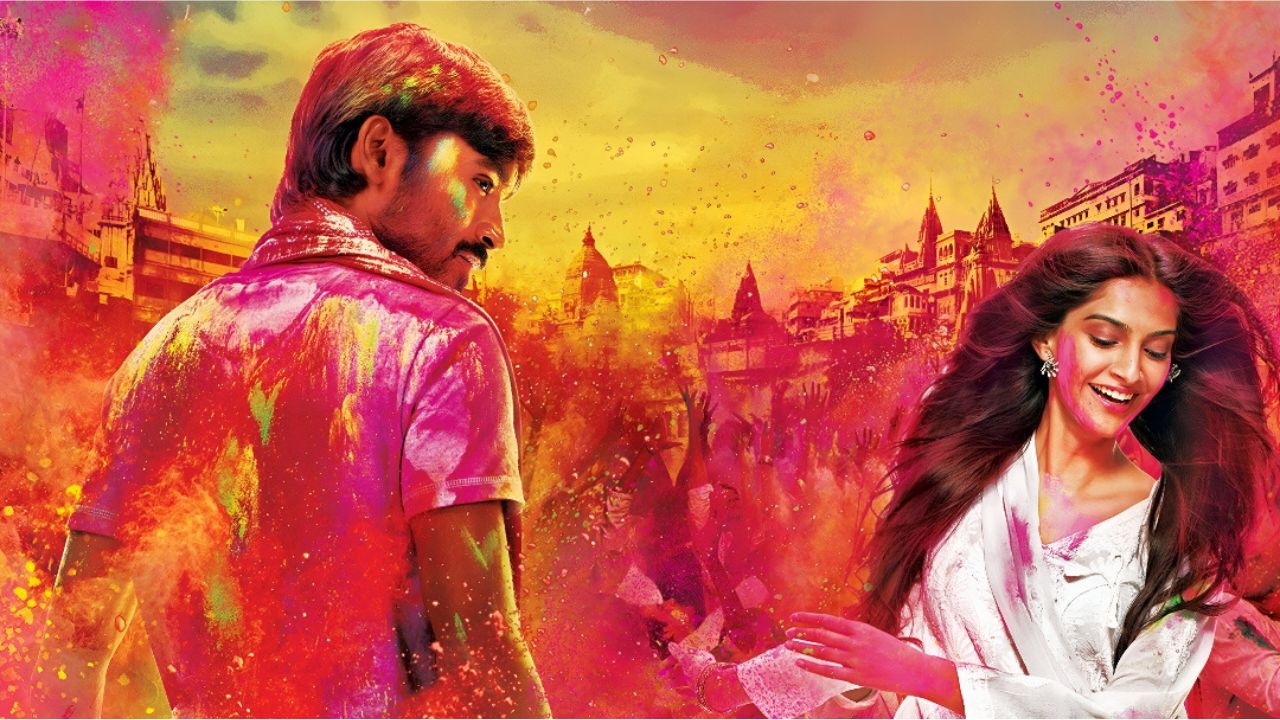
More than a decade after its release, Raanjhanaa, the cult romantic drama that launched Dhanush into Bollywood, is returning to theaters on August 1. But rather than celebration, the re-release has caused a huge scandal. The film studio, Eros International, has used artificial intelligence to produce a brand-new, changed climax without notice or consultation from its original director, Aanand L. Rai.
The 2013 original was universally acclaimed for its gritty portrayal of one-sided love, obsession, and redemption. Dhanush acted as Kundan, a provincial boy hopelessly in love with Zoya, played by Sonam Kapoor. The tragic finale, in which Kundan’s life ends after a lifetime of pining, was emotionally deep and well-received for its unconventional storytelling.
The studio is reportedly unveiling an AI-generated “more uplifting” ending to appeal to a fresh audience.
But the decision has not gone down well with the filmmaker.
Speaking to SCREEN, Aanand L. Rai said, “I got to know through social media a couple of days ago. People have already been messaging me asking why the ending is being changed. I just can’t wrap my head around this.”
For Rai, the new version isn’t just a creative disagreement; it’s a breach of trust. “What is a happy ending? It’s a tragedy; that’s an emotion. How can you meddle with emotions? The voice of the film lies in that ending,” he added.
The director, who also co-produced the original under his banner Color Yellow Productions, said he plans to write to the studio to formally remove his name from the AI-modified version. “If not the filmmaker, at least listen to the audience,” he pleaded. “They’ve lived with the film for over ten years. They know what it meant.”
Rai confirmed that he was not involved in the re-release decision at all. “I wasn’t consulted. They’ve gone ahead and done this entirely on their own,” he said.
He also shared that this incident has been a major learning experience for him. “The only good thing that’s come out of this is I’ve learned my lesson. I have to be very careful while signing the dotted line,” he said. “Just to earn a few crores, they’re tampering with a writer, director, and actor’s creation.”
He believes that studios like Eros are now prioritizing short-term profits over long-term respect for cinema and its creators. “This is not just about my film. It’s about how stories are being altered without consent or conscience.”
The re-release is reportedly being tested first in Tamil Nadu, where Dhanush has a massive fan following. Rai speculated that the studio might be testing the waters in Tamil Nadu, having already sold the film to a distributor and possibly made a few crores in the process.
But he strongly opposed the idea that changing the region makes the act more acceptable. “If you commit a crime in Rome, it’s still a crime. Even if you’re releasing it in Tamil Nadu, where we don’t have much of a presence, my actor does.“ And I’m the one accountable for how his image is portrayed there through my film.”
Rai also raised an important question about the larger implications of such AI interventions. “They’ll realize it soon when actors and audiences start pushing back. No actors would want to work with such studios. Perhaps the studios do not wish to collaborate with actors any longer. They intend to produce movies using AI alone.
This phrase is an expression of the increasing unease in the creative world. Are we moving toward an age when technology trumps artistic expression?
To those who fell in love with Raanjhanaa for its emotional depth and tragic ending, the suggestion of a “machine-generated happy ending” strikes as a betrayal. The pain, confusion, and emotional evolution of Kundan’s character all led to that final moment. Changing it takes away the soul of the film.
While Eros International hasn’t responded publicly, social media is already buzzing with criticism. Long-time fans of the film are expressing disappointment and urging others to reject the new version.
Meanwhile, Aanand L. Rai is currently working on his upcoming film Tere Ishk Mein, featuring Dhanush and Kriti Sanon in lead roles.
Scheduled for release on November 28, the film promises to carry forward Rai’s signature storytelling—real, emotional, and deeply human.
This controversy has raised crucial questions about creative control, the ethics of AI in cinema, and how far studios should go in altering art for commercial gain. In an age where algorithms are beginning to shape entertainment, Aanand L. Rai’s stand is a bold reminder: real stories are built on human emotion, and they deserve to remain untouched.