
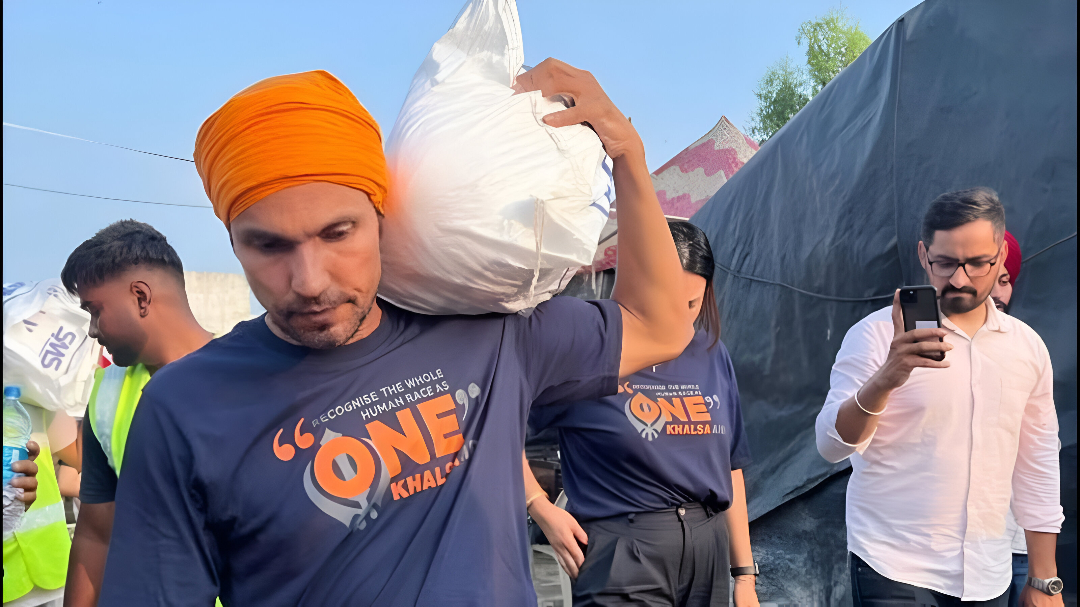
When floods hit, they do not merely ravage land and property; they sweep away years of toil, memories, and sometimes even the will to survive. In Punjab, where existence has always been about farming and community, the recent floods have submerged villages whole, flattened crops, and uprooted families. As the numbers give a report of devastation, it is the faces of individuals concerned, tired, yet still clinging on that tell the actual story of the tragedy.
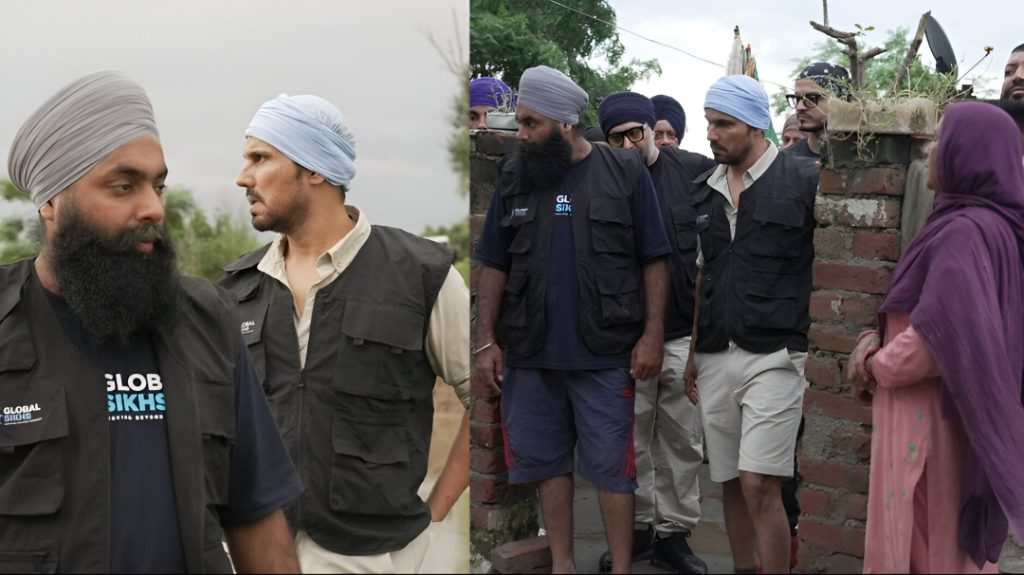
And in the middle of this devastation, actor Randeep Hooda quietly flew down to Punjab, not for a photo opportunity, but simply to stand alongside those who needed someone to lean on.
A State in Distress
Weeks of heavy rainfall turned Punjab’s rivers into overflowing beasts. Water gushed into farmlands, damaging paddy fields just before harvest. In villages across Gurdaspur, Amritsar, Ferozepur, Fazilka, and Mansa, homes were swallowed by water in a matter of hours. Families had to leave behind everything they owned, sometimes carrying only a single bag as they waded through knee-deep floods.
The official figures are staggering: over 175,000 hectares of farmland destroyed and more than 20,000 people evacuated. But anyone who has walked through a relief camp will tell you that behind each number lies heartbreak: farmers who don’t know how to repay debts, mothers worried about feeding their children, and elders mourning homes built brick by brick over decades.
Why Randeep Chose to Be There
Unlike many celebrity gestures that remain at the level of tweets and statements, Randeep Hooda has always preferred showing up in person. For more than a decade, he has been working with the Global Sikhs NGO, founded by Amarpreet Singh, alongside his close friend Maninder Singh. From the conflict zones of Manipur to natural disasters in Kerala and Maharashtra, their partnership has consistently brought relief to communities in need.
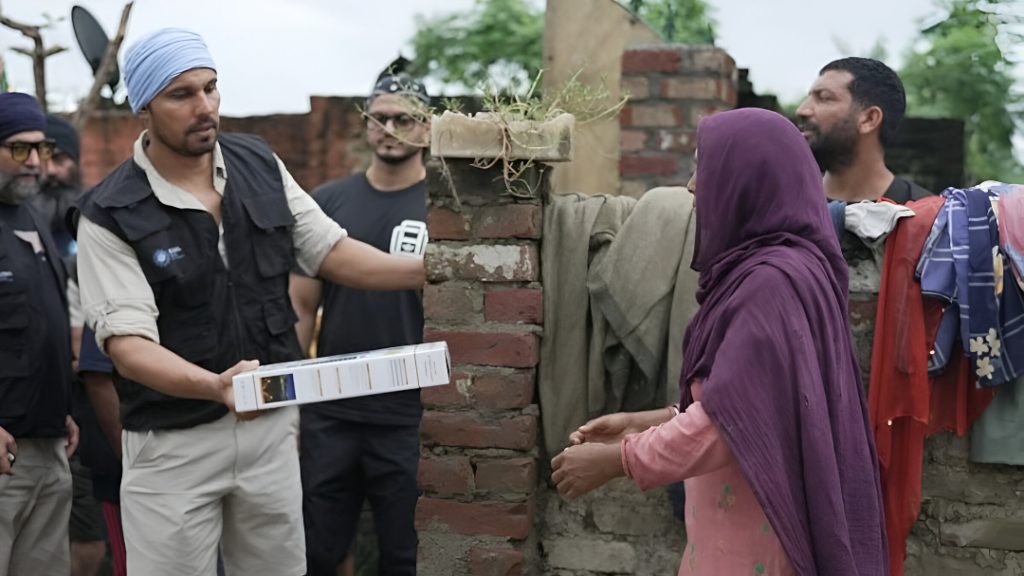
“He didn’t want to just send supplies,” shared a volunteer from the NGO. “He wanted to sit with the people, hear them, and remind them that their struggle matters.”
And that’s exactly what he did. In temporary shelters, Randeep heard families describe how floodwaters engulfed their possessions overnight. He met kids who hadn’t attended school for weeks and farmers who described barren fields where crops grew tall. He wasn’t there to make speeches; he was there to listen, to assure, and to simply share in their pain.
Relief Efforts on the Ground
With Global Sikhs and local volunteers, Randeep joined the distribution of food packets, medical kits, and safe water. Relief efforts have been difficult, with numerous villages isolated because roads are damaged. But every day, volunteers are plowing ahead, leaving no family behind.
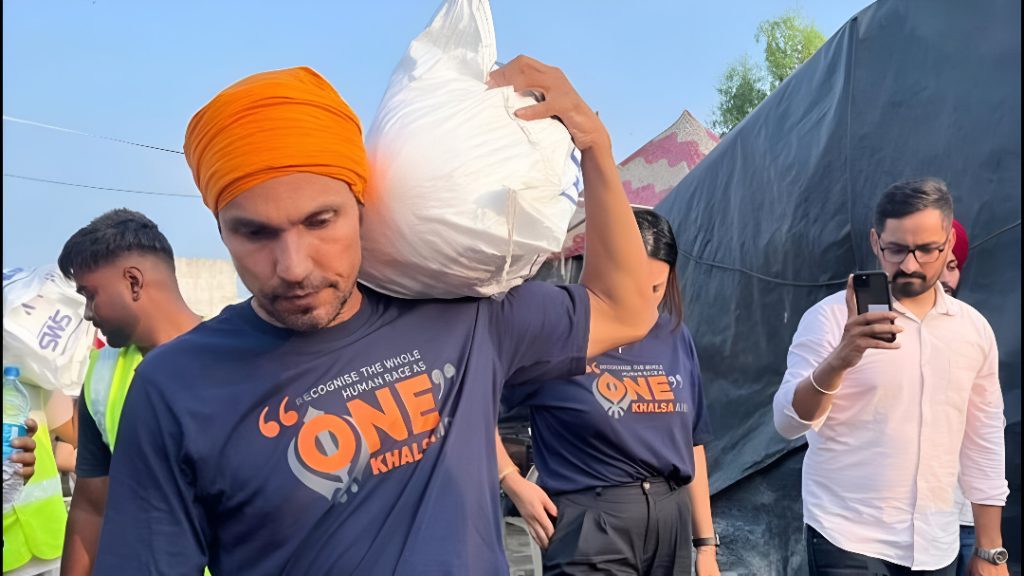
The state government has also stepped in, setting up 167 relief camps where more than 5,000 people currently stay. Punjab Revenue Minister Hardeep Mundian called it one of the worst floods in recent history, with evacuations stretching across 23 districts. Still, in most camps, the mood is fragile. Survival is possible, but rebuilding will take years.
The Human Side of the Crisis
Walking through a relief camp in Gurdaspur, one cannot escape the sound of quiet despair. A farmer in his sixties shared how his two sons had migrated abroad, leaving him to care for the land alone. With his paddy fields gone, he fears losing the only inheritance he had hoped to pass on.
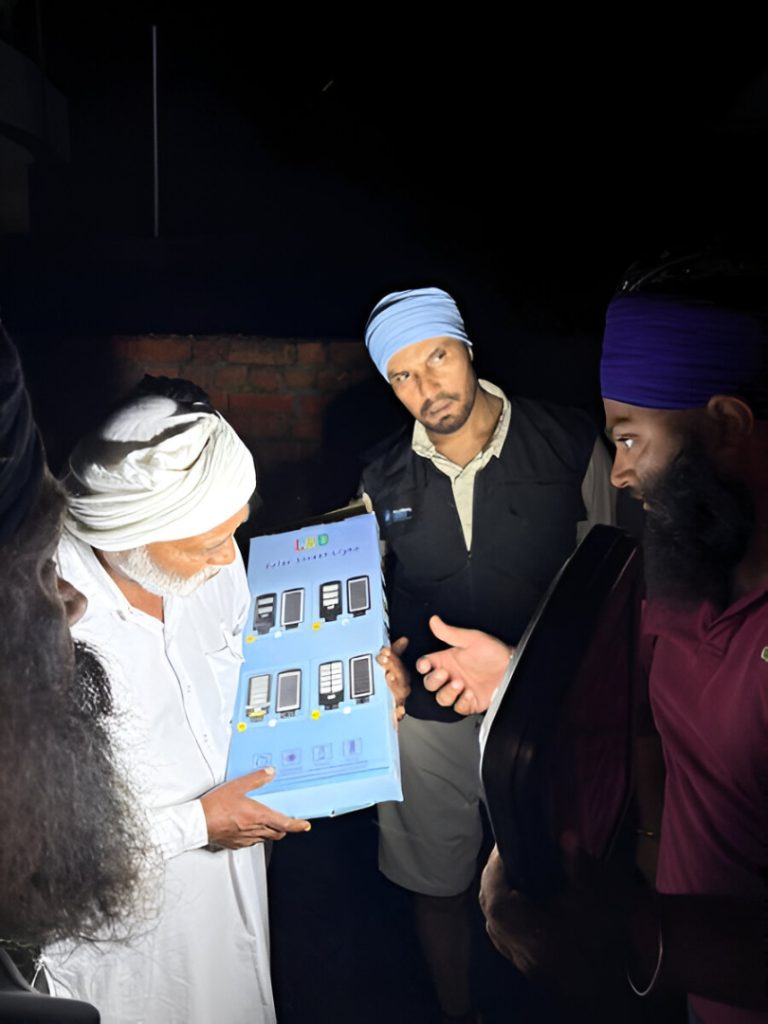
Nearby, a young mother tried to calm her two children, who hadn’t slept well since being moved to the camp. Her biggest worry wasn’t just food; it was whether her children would ever feel safe at home again.
These are not the stories that make headlines, but they are the lived reality of thousands across Punjab right now.
More Than Just a Celebrity Visit
What stood out about Randeep’s presence was his humility. There were no media entourages, no staged photo ops. Just quiet conversations, folded hands, and a reassuring voice. His bond with Global Sikhs has always been about action over attention, and in Punjab, that philosophy was clear.
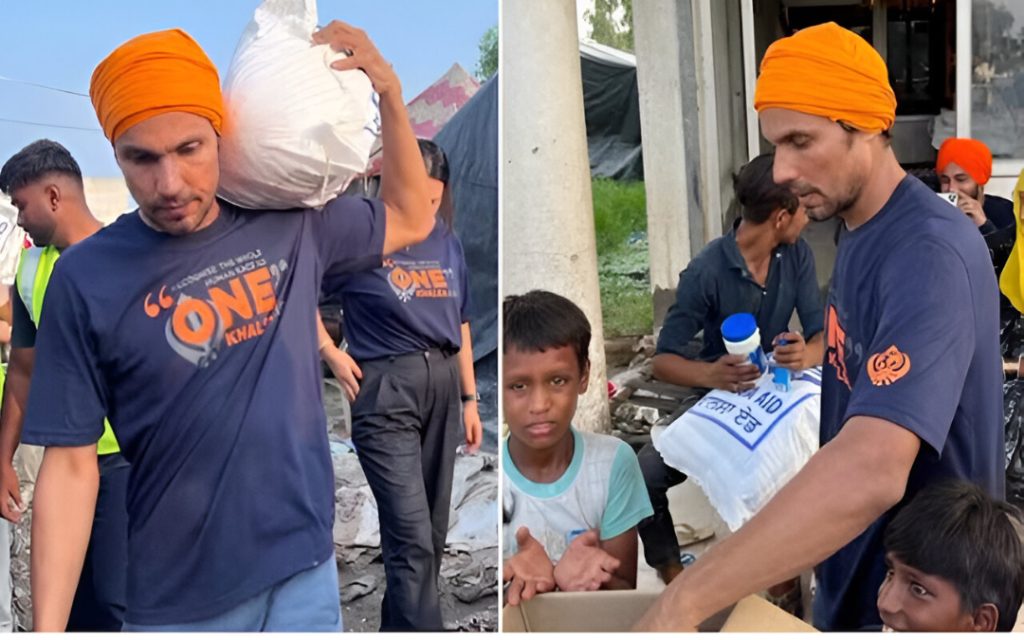
As Amarpreet Singh of Global Sikhs put it, “Relief is not charity. It’s about standing shoulder-to-shoulder with people as family.” Randeep embodies that belief. He didn’t come as a star; he came as a fellow Indian, willing to share in the grief and the hope of Punjab’s people.
The Road to Recovery
Floods might subside, but the effects of floods take long to fade even after the water recedes. Recovering houses, repairing farms, and stabilizing livelihoods will not be over in weeks; it will take years. The real challenge is not survival but ensuring that communities will be once more standing on their own two feet.
And yet, amidst destruction, the spirit of Punjab never falters. Volunteers toil round the clock, neighbors unite with all they have, and strangers are extended family. It is this disobedience that brings hope that Punjab will not only recover but be stronger yet.
A Reminder of Humanity
Randeep Hooda’s visit was not about star power; it was about compassion in action. It was about telling the people of Punjab that they’re not forgotten, that their suffering is not in vain, and that together they would be able to find a solution.
The floods might have left the land scarred, but they have also shown the best of human nature: solidarity, humanity, and the desire to stand together in the face of adversity. And as Punjab embarks on its own long journey of healing, that spirit will be its biggest ally.