
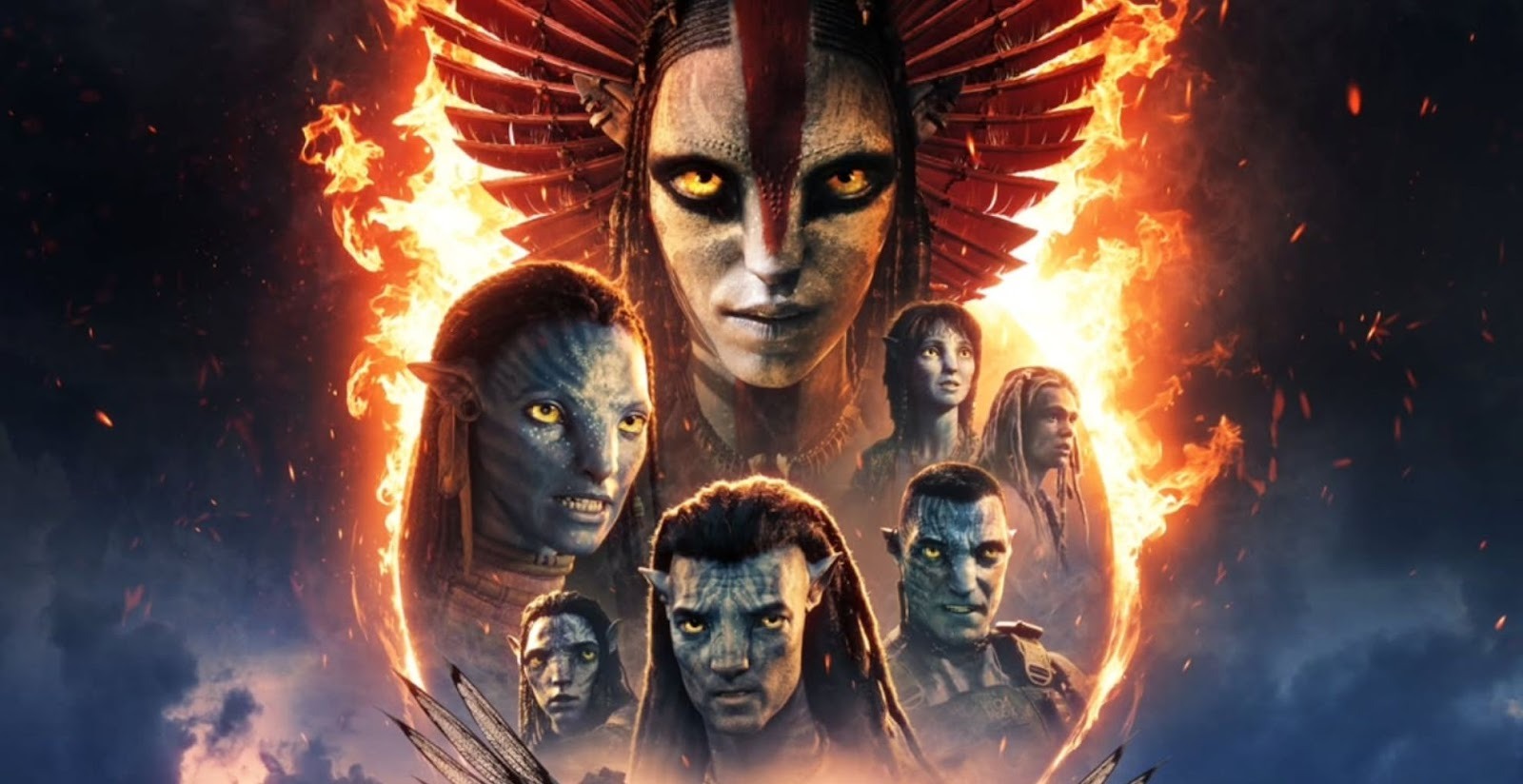
James Cameron returns to Pandora with Avatar: Fire and Ash, the third chapter in his long-gestating sci-fi epic, released on December 19, 2025. The film, which is a significant link between the past conflicts and the future of the franchise, pushes technological limits once again. However, it is unable to provide a story that is innovative and emotionally engaging, so the audience remains stunned but barely touched by the film. Here’s our review of Avatar: Fire and Ash
Rating: 3.0
A Familiar Conflict On A Larger Canvas
The film is set after The Way of Water and depicts the story of Jake Sully (Sam Worthington) and Neytiri (Zoe Saldaña) mourning the death of their eldest son. With the human forces threatening to take over Pandora, the family can no longer stay and thus moves to the Metkayina clan to avoid causing destruction in their home.
It is escalated by the volcanic Na’vi clan of the Mangkwan, also known as the Ash People, that rejects Eywa’s spiritual balance and thrives on conquest. Their leader, Varang (Oona Chaplin), is a complete contrast to the Na’vi that Cameron has presented to us before,and by doing this, her clan becomes both the internal and external antagonists in the ongoing struggle of Pandora against the forces of destruction.
World-Building at Its Most Ambitious
Fire and Ash, from a visual perspective alone, is a masterpiece. Cameron takes Pandora to the burnt lands with ash storms, lava, and fire-adapted animals. The film’s extensive battle scenes are the film’s perfect complement to the detail put into the designed ecosystem.
The volcano scenes and the aerial fighting sequences are the most eye-catching shots the franchise has come up with so far. One of the film’s strongest points is Cameron’s skill in keeping visual harmony even though the universe is so vast.
Thin Characters and Predictable Storytelling
Even with its visual success, the story is just too familiar. The movie structurally mimics the previous ones very closely, giving us the same sequence of events: displacement, rising threat, reluctant leadership, and war. Thus, the thriller elements in the story become obvious long before their actual revelation.
The scripts are shallow and the characters superficial, whereas the dialogues are frequently of no distinction. The moments intended for the audience to emotionally connect often feel as if they were quickly done or lacking in their execution. The younger characters have gained more screen time; however, their lines often sound like they are artificially constructed, not capturing the true emotional and generational depth.
Jake Sully’s continued portrayal as a hesitant leader who is always indecisive hardly makes sense, layered with his previous films, as it lacks change, and his power as the story’s central figure diminishes.
Performances That Briefly Elevate the Film
The most prominent figure in the story is probably Neytiri, played by Zoe Saldaña. The character of a mother going through the stages of grief, anger, and survival instincts is what her performance really brings to the table, and it gets very intense and very powerful very quickly. One of the very few lines of the story that gets real and deep is Neytiri’s conflict within her, which is mainly about the increasing hatred of the humans.
Oona Chaplin shows great power and energy in the portrayal of Varang and thus helps to build up a strong opponent character. Nonetheless, her story arc is still very much lingering, and by the film’s end, there is no closure. Stephen Lang’s Miles Quaritch remains very dynamic and full of energy, yet his end is more of a plot device than a thematically enriching one.
Also Read: Vishal Jethwa Reacts To Homebound Getting Shortlisted For Upcoming Oscar Awards, Says “It Feels Surreal And…”
A Spectacle That Feels Assembled, Not Lived-In
There is a lot happening visually during the final moments, including the war with the Tulkun, yet, the feeling evoked is quite different. An extremely subdued background score for these scenes also contributes to their lack of power, as it often quite drastically lowers the level of the epicness of the action, sometimes making it come across as being somehow smaller than it actually is.
In the end, the third chapter of the Avatar saga, Fire and Ash, looks like a handful of beautiful shots put together without a common emotional thread running through them. It is still very much a movie to be seen on the big screen, but it is lacking in storytelling depth that would have given it the right to such a length and such an ambitious reach.
Final Verdict
James Cameron is still the king of visual innovation, as evidenced by his work in Avatar: Fire and Ash. Nevertheless, without better writing, more mature characters, and deeper emotional involvement, this film seems more like replaying past hits rather than a significant step forward for the franchise. The next chapters of the saga are expected to focus as much on heart as on amazing visual effects.