
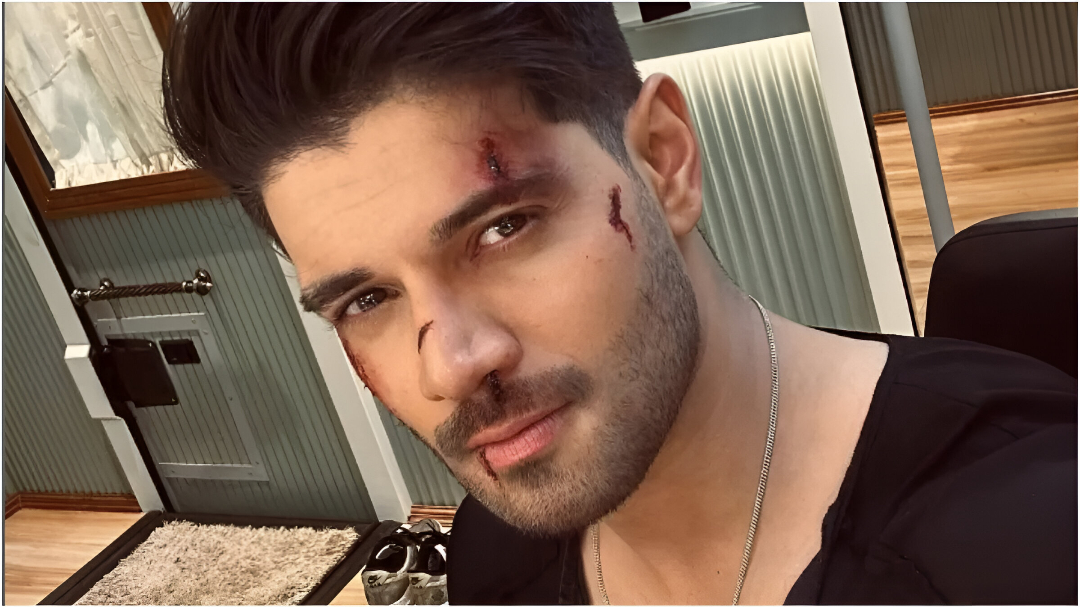

In this day and age of social-media-addicted entertainment, fame is no longer merely achieved through talent; it’s built, purchased, and marketed. Actor Sooraj Pancholi, who has been around Bollywood for more than a decade and has seen his share of highs and lows, recently opened up about how fame in the industry is more about money and marketing than merit.
In an enlightening interview with Hindustan Times, Sooraj provided a candid, rare insight into the glamour vs. grunge reality: the stress of keeping up a digital image, the increasing phenomenon of pay-to-promote culture, and how social media is changing the face of what it means to be a “star” in the 2020s.
“If It Were Up to Me, I Wouldn’t Have Social Media.”

While actors today are expected to be influencers as much as performers, Sooraj is refreshingly old-school. “If it were up to me, I wouldn’t have social media,” he said. “So many actors don’t have it, and I’m jealous of them.”
Yet he doesn’t deny its power. “Everything can be managed by the amount you have in your bank, at least your visibility can be, and sometimes even your perception,” he observed. With honesty, he added, “Everybody is doing it.”
He also praised younger actors for understanding the game. “They’re very smart. I wish I thought like that. People like me can only do damage control. As for perception about me, pehle kaam to karoon (first let me do some work),” he said, acknowledging how marketing now often precedes performance.
₹30 Lakh for a Podcast Appearance?
In another conversation while promoting his film Kesari Veer, Sooraj revealed something even more surprising: celebrities are paying to appear on high-profile podcasts. “I’ve heard some actors pay ₹30 lakh to be on a podcast. I came here for free. At least pay me ₹30,000,” he joked.
The laughter didn’t make it any less true. Sooraj confirmed he’d received such offers himself. “Yes, I’ve heard that too. Podcasters who have good viewership ask for ₹30 lakh for an appearance.”
Rather than criticize it outright, he acknowledged the logic behind it. “It makes sense in a way. They give you reach and visibility. They’ve worked hard to build their platforms, so why not charge for it?” His remarks highlight how digital influence now plays a bigger role in shaping celebrity image than ever before.
No More Mystique: The Changing Face of Stardom

One of Sooraj’s strongest points was about how social media has chipped away at the aura that once surrounded stars. “There are people as hardworking as superstars. But social media has made everything so available now. Agar yeh nahi hota, people would still be superstars. Mystery nahin hai ab (If this wasn’t there, people would still be superstars). There’s no mystery now,” he said.
To make his point clearer, he used a perfect analogy: “Pehle biryani sirf Eid pe milti thi. Ab Zomato aur Swiggy ne use 20-minute ka bana diya hai. Ab chahiye bhi nahi.” (Earlier, biryani was special and came only on Eid. Now, Zomato and Swiggy deliver it in 20 minutes. And we don’t even crave it anymore.)
In today’s hyper-connected world, where celebrities constantly post updates, go live, and share rehearsed interviews, the charm and intrigue that once defined stardom have faded. Access has replaced admiration.
Bollywood: From Stories to Strategy

What emerges from Sooraj’s words is a Bollywood that has transformed from being about storytelling to being about strategy. A good film is no longer enough; what matters is who’s talking about you, where you’re trending, and how many people see your face on a screen, even if it’s a phone screen.
For someone like Sooraj, who isn’t aggressively playing the promotional game, staying relevant becomes more difficult. “Being seen” is now a separate job altogether, one often outsourced to PR firms or digital agencies or bought outright through podcast appearances, collaborations, and boosted content.
While Sooraj isn’t bitter, he’s clearly aware of how the system works. He isn’t preaching, but his observations act as a quiet warning: the business of fame is becoming more manufactured than ever.
A Rare Voice in a Polished Industry
Sooraj’s openness about pay-to-promote culture is refreshing precisely because so few speak about it. His acknowledgment of the pressure to stay visible, the cost of relevance, and the manufactured nature of perception today offers a glimpse into the hidden side of stardom.
In a time when podcasts can charge lakhs for appearances, when Instagram grids are planned like magazine covers, and when mystery is sacrificed for metrics, Sooraj reminds us of what’s being lost even if it’s no longer in fashion to admit it.
Final Thoughts
Sooraj Pancholi may not be dominating headlines, but his honesty cuts through the noise. From calling out paid podcast culture to admitting his discomfort with social media, he’s offered a grounded perspective on the price of visibility.
Whether or not he adapts to this fast-paced world of digital PR, one thing is clear: Sooraj isn’t afraid to speak his truth. And in an industry built on image, that kind of authenticity might be the rarest quality of all.