
Rating: 2/5 stars
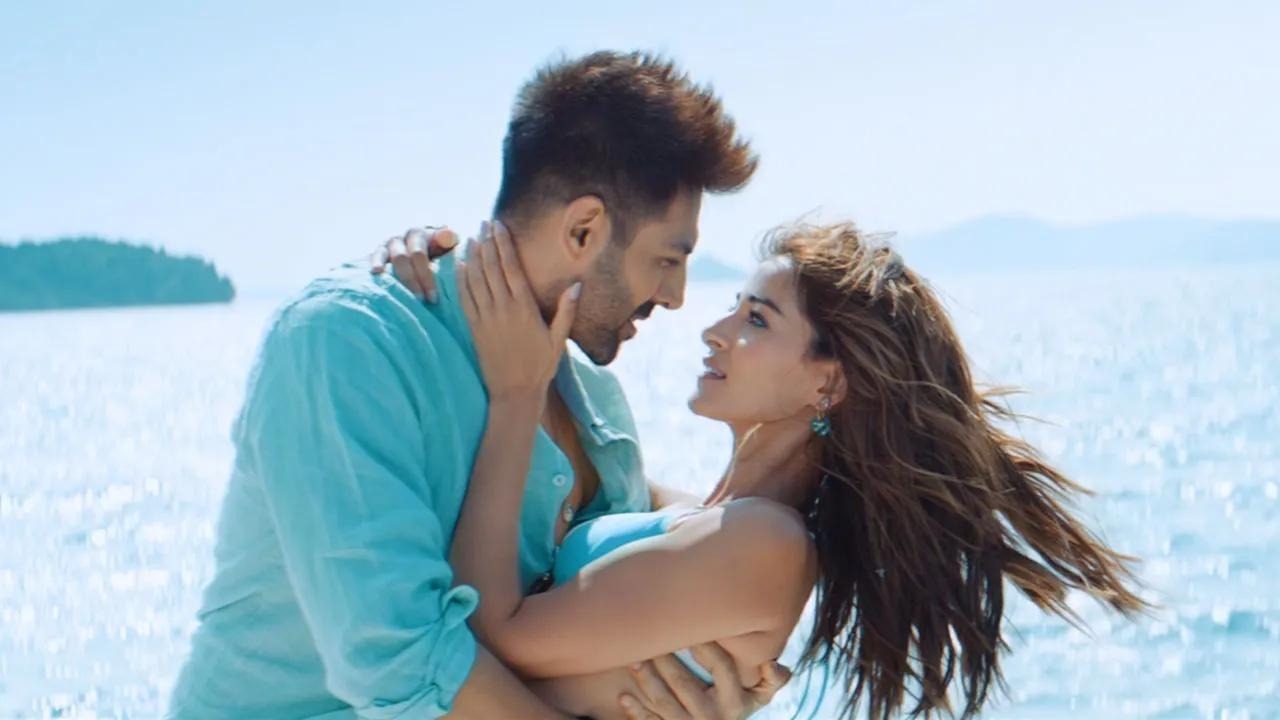
Love blossoming on the open roads of Croatia, the feel of old Dharma tunes in the background, and two people searching for love, this is the beginning of ‘Tu Meri Main Tera, Main Tera Tu Meri.’ It all sounds perfect. But as the film progresses, one realises that the story, as good on paper, doesn’t translate as effectively on screen.
TMMMTTM is a film by Sameer Sanjay Vidwans, produced by Karan Johar, Adar Poonawalla, Apoorva Mehta, Bhumika Tewari, Shareen Mantri Kedia and Kishor Arora under the banners of Dharma Productions and Namah Pictures that brings together Kartik Aaryan and Ananya Panday. Their on-screen chemistry is decent, but their performances don’t reach a level where the audience can fully connect.

Kartik plays Ray, who seems comfortable in his familiar style; his goofy demeanour works in the lighter scenes, but the story leaves him alone in the emotional parts. Ananya Panday plays Rumi, a writer searching for true love, but she struggles in the emotional and romantic scenes. This isn’t the first time Kartik and Ananya have shared screen space; earlier, they were seen in Pati Patni Aur Woh and were admired, but this time, they couldn’t get better.
The story begins with the meeting of Ray and Rumi. Ray, a wedding planner, and Rumi, a writer, meet on a trip to Croatia. The first hour of the film revolves solely around their growing closeness. This part is visually beautiful, but offers very little narrative depth. It’s unclear when and how they fell in love. Rumi’s search for true love, separate from today’s ‘hookup culture,’ could have been a strong idea, but it lacks depth.

The plot twists when Rumi struggles with the thought of leaving her father, Colonel Amar Vardhan Singh (Jackie Shroff), alone and moving to America. This is where the film aims to address family, compromise, and relationships, but it’s also rushed through.
The film’s true spirit is revealed in the second half, thanks to Jackie Shroff and Neena Gupta. Jackie Shroff is effortless and effective in his role as a retired army officer. Neena Gupta, as Kartik’s mother, lends strength to the film. They both anchor the story as soon as they enter the scene. Chandni Bhabhda, who plays Ananya’s friend, also does a decent job in her part, and in some places, leaves a bigger impact than Ananya.
The supporting cast makes the second half worth watching. There’s a bit of humour and discussion about relationships. Interestingly, Kartik’s chemistry with Jackie Shroff feels more natural than with Ananya.
The film’s main message, compromise for family and equality in relationships, is repeatedly reiterated in a dialogue by Ray, but its impact is quickly dissipated in the last 15 minutes. The ‘ghar jamai’ angle isn’t new, but it could have been portrayed better. If the second half of the film had focused more on Ray’s adjustment to his new life, it might have been more effective.
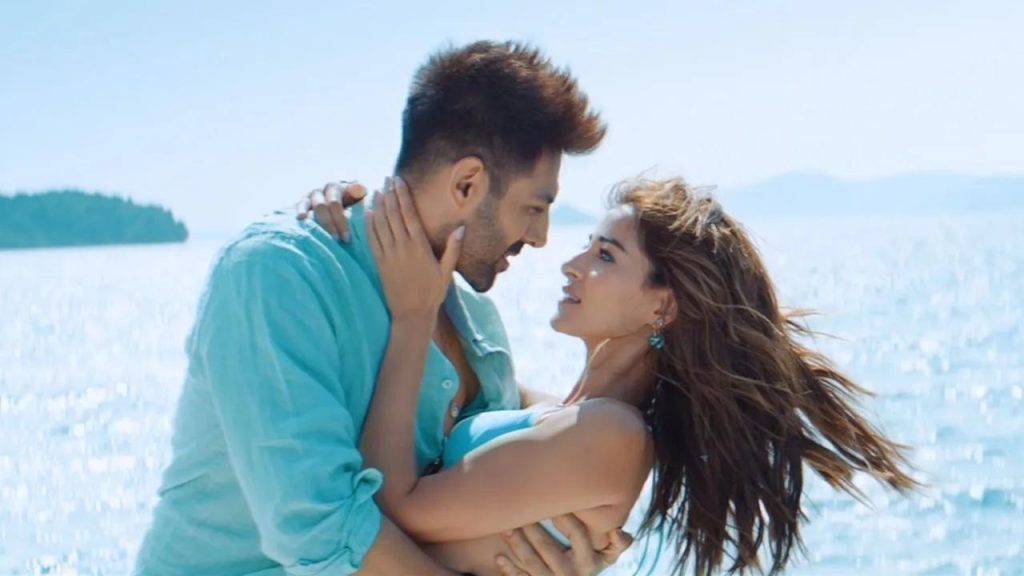
Speaking of music, Vishal-Shekhar’s music fails to propel the story forward. Only ‘Hum Dono’ makes a slight impact. The other songs, especially Lucky Ali’s track, add to the film’s slow pace. Interestingly, only the old Dharma-style music playing in the background evokes a bit of nostalgia and connection.
Technically, the film is fine. The cinematography is beautiful, and the locations look like postcards. But in the end, it feels like a pretty postcard with nothing large in amount to write home about.
‘Tu Meri Main Tera, Main Tera Tu Meri’ ends up being a film that talks a lot about love, but fails to touch the heart. You might linger for the scenes between Jackie Shroff and Neena Gupta, but even after the film ends, you’re left searching for the love the title promises.