
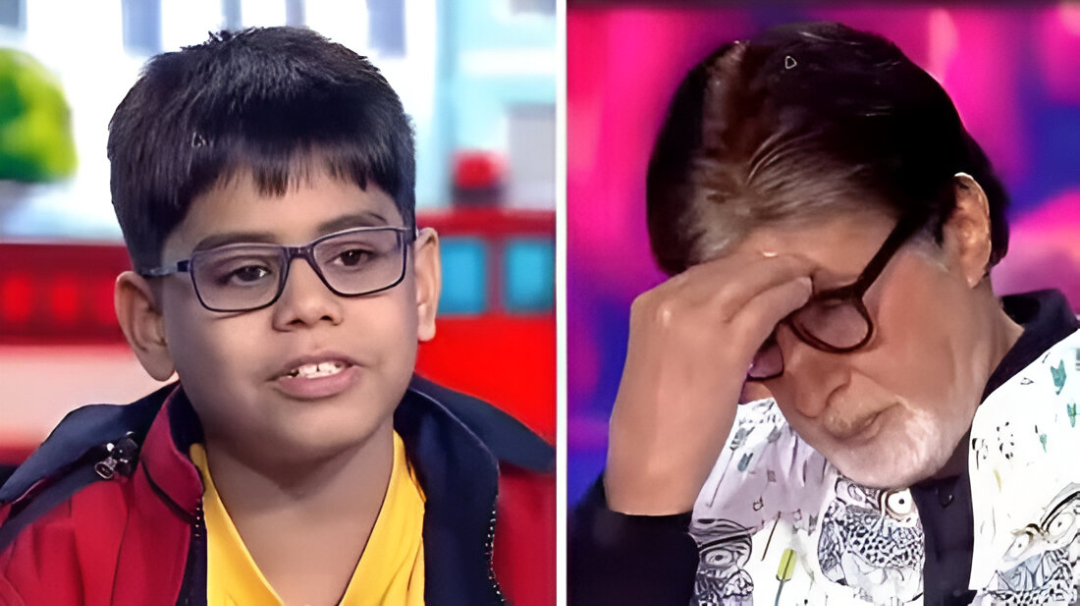
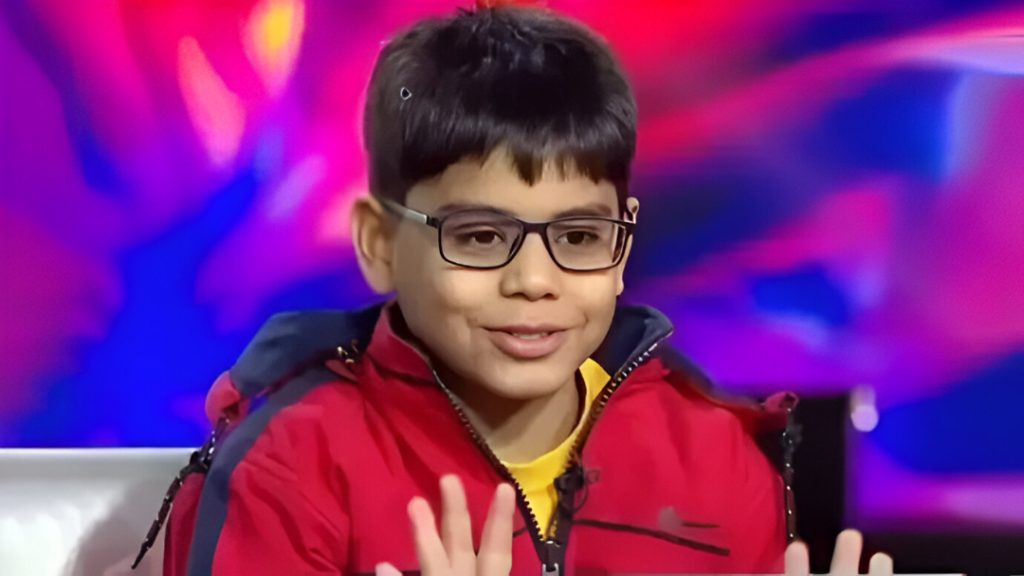
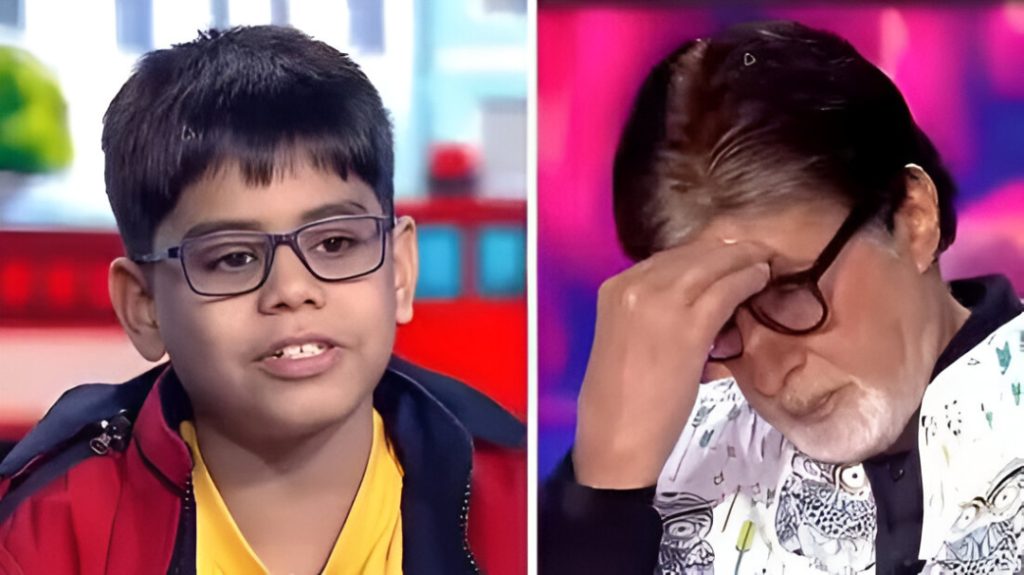
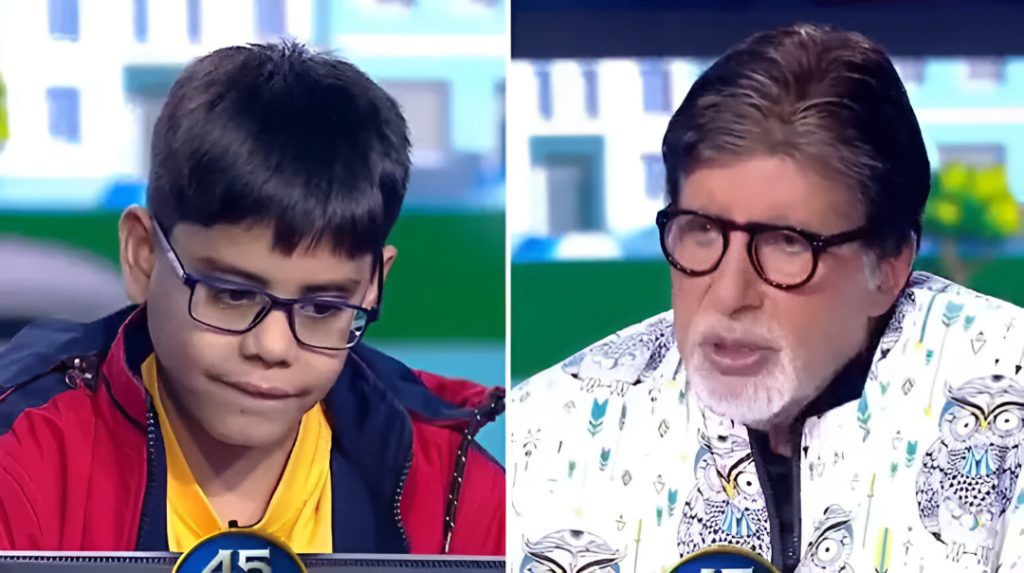
Ten-year-old Ishit Bhatt from Gujarat probably dreamed of sitting across from Amitabh Bachchan, answering questions under those bright Kaun Banega Crorepati lights, and maybe even winning big. Instead, what he walked away with wasn’t applause or a check; it was a wave of social media ridicule.
Clips from his episode began circulating online almost instantly. Within hours, Ishit’s confident answers and slightly cheeky tone were being dissected, mocked, and turned into memes. What many called “overconfidence” or “rudeness” toward the host quickly turned into a full-blown online debate. But what made things worse was how the internet dragged his parents into it, labeling them as “poor role models” or “bad influences,” all based on a few televised minutes of their child.
It begs the question: Is it really fair to hold parents responsible for everything a child says or does in public?
Children aren’t mini-adults; they’re still learning.
“Both temperament and environment shape children’s behavior,” says Dr. Sushma Gopalan, a child psychologist at Aster Whitefield Hospital. “Some kids are naturally bold and outspoken; others are reserved or cautious. Parenting helps shape how these traits appear, but it doesn’t rewrite a child’s core temperament.”
In simpler terms, confidence, curiosity, and even the occasional sass are part of how children explore their personalities. What adults often read as arrogance could simply be a young mind testing boundaries or expressing nervous excitement in a high-pressure setting.
A child on national television is not performing in their natural environment; they’re performing under stress, in front of millions. To expect flawless composure is unrealistic, even for adults.
Why blaming the parents isn’t just unfair—it’s lazy.
It’s easy to point fingers at parents. After all, they’re the ones shaping the child’s world, right? But as Dr. Gopalan notes, “Expecting parents to have complete control over a child’s every action is neither fair nor realistic.”
Children are emotional learners; they absorb from school, friends, television, and the internet. Sometimes, they imitate speech patterns they think sound confident or funny. Other times, they simply act out because they’re nervous or overwhelmed.
Every parent knows that a child who’s polite and kind at home can still say something impulsive in public. That doesn’t mean there’s a parenting failure; it just means they’re children, not programmed machines.
When confidence looks like arrogance
Imagine being ten years old and sitting across from Amitabh Bachchan. Cameras in your face. Studio lights glaring. The audience is watching. Millions waiting to judge.
Even adults crumble under such pressure, but a child? They do what children do best: they mask their anxiety in the only way they know.
“Excitement or nervousness can easily come across as arrogance,” says Dr. Gopalan. “Children often perform emotions; they’re not trying to be rude, they’re just trying to manage how they feel.”
So what we interpreted as overconfidence might actually have been Ishit’s way of coping with nerves. Maybe he wanted to sound funny. Maybe he thought confidence would win applause. Either way, he was just a kid trying to do his best on a big stage.
The myth of “good parenting” in viral culture
In the age of quick clips and quicker judgments, we often measure parenting by how a child behaves for ten seconds on camera. Quiet equals well-behaved. Polite equals well-raised. But real parenting doesn’t look like that.
“Parenting is a long, messy, beautiful process filled with mistakes, tears, and learning moments,” Dr. Gopalan reminds us. “You cannot capture that in a viral clip.”
The truth is, every child messes up. Every parent struggles. But those aren’t failures; they’re lessons. The online outrage, on the other hand, reflects our obsession with polished images, where even a child must perform “good behavior” for validation.
What this says about us
Let’s be honest. The outrage over Ishit’s clip says more about our culture than about his manners. We are a culture that still worships obedience and humility, often more than confidence and honesty. Especially when it comes to children, we hold niceness as a virtue.
But what if a child’s confidence threatens that idea? What if we’re uncomfortable seeing a kid who isn’t shy, who doesn’t giggle nervously, and who talks back just a little?
Our need to publicly shame or “teach lessons” online reveals our own discomfort more than it reflects the child’s behavior. And worse, the trolling can have a lasting impact. “Online ridicule can deeply hurt a child’s self-esteem and distress the family,” Dr. Gopalan warns. “These experiences can linger far longer than the viral moment itself.”
The takeaway
Every child deserves room to stumble, to learn, to say the wrong thing, and to try again. Parents deserve space to guide without being publicly crucified for every imperfection.
A few seconds of screen time shouldn’t turn into a moral judgment on an entire family. Maybe, before we hurry to mock and blame, we should stop to consider what lesson we’re learning by our response.
Perhaps it is not the 10-year-old that must be taught to be humble and compassionate.
Perhaps it’s us.