
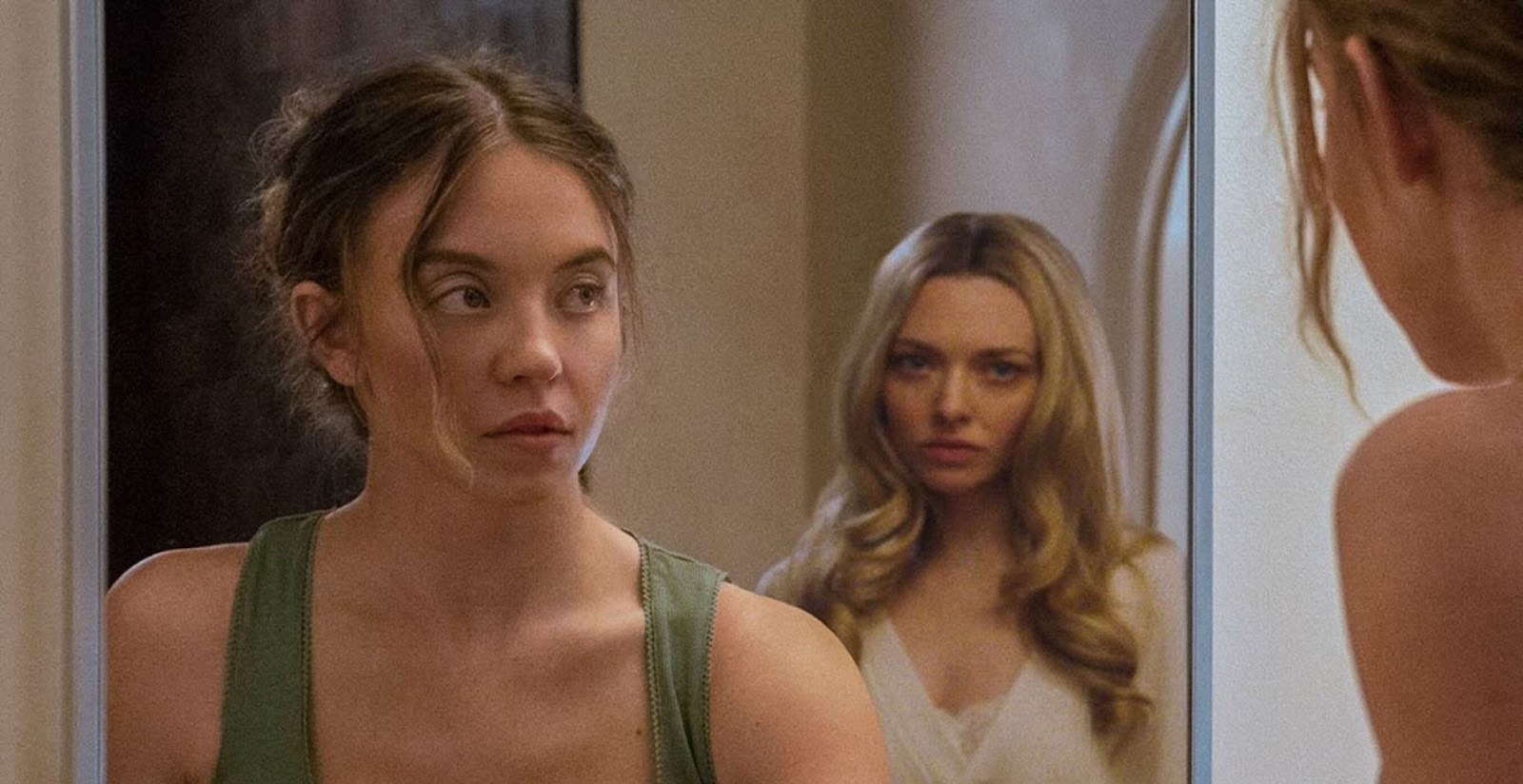
Paul Feig’s The Housemaid is like an elegant slap in the face. It is smooth, provocative, and way sharper than one would expect at first glance. The 2025 film, an erotic and psychological thriller, is a loose adaptation of Freida McFadden’s bestselling novel and is not shy about displaying its excess, melodrama, and genre aspects; however, it also subverts them. The film, which is powered by fearless performances of Sydney Sweeney and Amanda Seyfried, doesn’t just exist for the revival of the 1990s domestic thriller’s aura; it rather challenges those deeply gendered narratives that it was based on.
A Familiar Setup With Sinister Intent
Milly Calloway (Sydney Sweeney) is a young woman with a past that is not very bright and who doesn’t have a place to live. The moment she agrees to be a live-in housemaid at the Winchester family, it is less of an opportunity and more of a necessity to keep alive. Nina Winchester (Amanda Seyfried), the woman who runs the house, at the beginning, gives a fake impression of herself as being kind, delicate, and extremely polite, whereas her husband, Andrew (Brandon Sklenar), looks like an approachable guy with good manners and a calm type of power.
Not only the attic room with the locked door, the inflexible rules of the household, but also the feeling that Millie is always under the watchful eye, create a mood of uneasiness in The Housemaid from the very beginning. Feig is really quick in disturbing the audience without showing the evil behind the polished and shiny world. He makes use of the shining surfaces and perfect-looking interiors in order to put the decay underneath.
Sydney Sweeney’s Calculated Vulnerability
Sydney Sweeney gives one of her most measured performances. Millie is not a character that is stagnantly portrayed as a helpless victim, but rather as a woman who understands deeply how society interprets her, poor, lonely, and easy to dismiss. Sweeney embodies the character with a subdued tension, allowing the audience to feel her discomfort beneath her polite facade. Even her gestures, starting from the way she walks around the house to how she looks down in a confrontation, tellingly reflect the narrative without words.
Most importantly, the film shows how the narrative of Millie as an unstable character is used against her. It keeps questioning: which person or group benefits from it when a woman’s emotive reaction is referred to as crazy?
Amanda Seyfried’s Delicious Descent
Amanda Seyfried is the one who most definitely comes out the winner with a performance that pretty much goes back and forth from a kind of decorous and charmingly sweet nature to a scarily downright oppressive and threatening one. Nina Winchester is the character who is presented as fragile and slightly off her rocker; however, Seyfried adds so much in her performance that the viewers keep doubting their perception. Her unpredictable behavior is very much like a stage play, at times even deliberately over the top, but it helps because it shows how female genders are frequently being put into the classification of extremes of being hysterical or powerless.
Once Nina’s conduct gets out of hand, Feig shifts the film into the domain of terror rather than that of a subtle and psychologically dreadful one, making it possible for Seyfried to take on the roles operatic insanity to the full extent.
Masculinity as the Real Threat
One of the film’s confounding reversals is in how it depicts Andrew Winchester. Brandon Sklenar portrays him as the typical rescue hero, good-looking, serene, and apparently logical. He is presented as the cure for the disorder of the females, the man who keeps things under control.
However, The Housemaid uncovers layer by layer that this controlled masculinity is actually the main power destruction. In a pointed, sharp feminist argument, the film argues that women are not pushed to the edge by their own emotions, but by men who manipulate, incite, and then act as if they are innocent when things fall apart.
Camp, Carnage, and Controlled Chaos
Feig’s direction is very much in line with a heightened type of tone. The film is not a slow-burning thriller that would be interested in realism; rather, it is a deliberately indulgent genre piece that is stuffed with nudity, violence, and the absurdity that keeps on rising. Most of the characters in the movie, Michele Morrone’s mysterious groundskeeper and Elizabeth Perkins’ cold matriarch, for instance, get the film’s lurid vibe and, thus, contribute to it further, without being too long or too much.
The ultimate scene goes down in a gory manner, giving up the psychological tension for cathartic release. Some people may find the transition to be sudden and startling; however, it is in accordance with the film’s bigger goal: uncovering the dirt that is underneath the well, polished domestic fantasies.
Also Read: Is Kriti Sanon Going To Replace Jacqueline Fernandez In Salman Khan’s Kick 2? Here’s What We Know
A Modern Answer to the Madwoman Trope
The Housemaid is a movie with a rich literary heritage that ponders the issue of why people perceive women to be mentally unstable so quickly. The film depicts the characters’ insanity as a consequence of being restricted, dominated, and ignored. The attic has ceased to be a mere location; it signifies the sum of all the things that women have to keep under their control within themselves.
Final Verdict
The Housemaid is flashy, pulpy, and deliberately provocative, but beneath the gloss lies a surprisingly pointed critique of gender, power, and perception. Elevated by fearless performances from Sydney Sweeney and Amanda Seyfried, the film succeeds as both a guilty pleasure and a subversive feminist thriller. It may not whisper its message, but it ensures you hear it loud and clear.